


The essentials in brief:
How is whey protein made? Whey protein is produced during cheesemaking when milk is separated into solid components (cheese) and liquid whey. The whey is filtered to remove fat and lactose and then dried. The result is whey protein powder.
Whey isolate, whey concentrate or whey hydrolysate – which is better? There is no simple answer, as it depends entirely on you and your personal goal.
How is whey protein made?
Before we answer the question, let's take a step back and start from the very beginning. Milk from mammals provides 2 different protein fractions: casein and whey protein.
Whey protein is quickly digested, leading to a rapid increase in amino acids in the blood. It is rich in leucine, an important amino acid for muscle building. For this reason, whey protein is often used directly after training to quickly supply the muscles with nutrients.
Casein protein is digested slowly and continuously releases amino acids over several hours. It also contains leucine, but the release takes place over a longer period, which makes it particularly useful for protein supply, e.g. overnight.
Now, back to the original question: How is whey protein made? Whey protein is produced as a byproduct of cheesemaking. The process can be described as follows:
- Milk coagulation: During cheesemaking, milk is separated into solid and liquid components using enzymes (usually rennet) or acids. The solid components form the cheese, and the liquid component is the whey.
- Whey extraction: The whey, which contains about 20% of the milk protein, is separated from the solid components and collected.
- Filtration: This whey is then filtered multiple times to remove fats, lactose and other unwanted components. Mainly the proteins remain.
- Drying: The filtered whey protein is dried into a powder, which is then available as whey protein in various forms such as concentrate or isolate.
Whey concentrate – creamy, delicious & versatile
During production, it is usually obtained from whey using cold-pasteurizing ultrafiltration, which is produced as a byproduct during cheesemaking. The gentle production at a low temperature ensures that all natural protein fractions are preserved – in other words: the protein is not denatured. The whey concentrate, obtained through various filtration processes, reaches a protein content of 70-80%. The carbohydrates still account for 7-8% and the fats for 3-5%. After several filtration passes, the whey concentrate does contain a substantial amount of protein, but also still carbohydrates in the form of lactose, making it less digestible for lactose-intolerant people than an isolate, in which the protein content – as the name suggests – is isolated.
You don't know your protein requirements? We recommend you take 2 g of protein per kg of body weight daily.
Whey isolate – refreshing, delicious & clear
To obtain an isolate from whey concentrate, additional production steps are required, in which the protein is almost entirely isolated. The production of whey isolate takes significantly more time and requires special microfiltration. Due to the targeted isolation of the protein, the isolate has a particularly high level of purity. The final product contains an average protein content of approximately 90-95%, making both the fat and lactose content negligibly low. Whey isolates are therefore also suitable for people with lactose intolerance. Want more info? Then we recommend our article: Whey and lactose.
Whey hydrolysate – effective, delicious & creamy
Whey hydrolysate goes one step further in production: Here, the protein is enzymatically split, which is called hydrolysis. During this process, the proteins are enzymatically split into smaller peptides, which supports the body in absorption. This advantage is particularly evident after intense training sessions, as the hydrolysate is extremely quickly digestible and supplies the muscles with amino acids in no time.
With a protein content of up to 90%, the hydrolysate is hardly inferior to the isolate in terms of purity, but it also scores points with its excellent digestibility. The enzymatic process reduces allergenic components, such as lactose, to a minimum, making the hydrolysate particularly suitable for people with a sensitive digestion or specific intolerances.
Whey isolate, whey concentrate or whey hydrolysate – which is better?
The amino acid profile of all whey proteins is almost identical – the difference lies in macronutrients, digestibility and purity.
Whey concentrate contains about 70-80% protein as well as slightly more carbohydrates (lactose) and fats. It impresses with its creamy taste and is ideal for everyday use if there is no lactose intolerance.
Whey isolate offers the highest purity with up to 95% protein and minimal fat and lactose content. It is optimal for calorie-conscious athletes and people with lactose intolerance.
Whey hydrolysate with about a 90% protein content is similar to the isolate, but represents the fastest and most easily digestible option. Through enzymatic splitting, the protein is broken down into smaller peptides, which accelerates absorption – perfect for optimal protein intake after intense training or with a sensitive digestive tract.
Only one question remains: Which whey protein do you choose? Here you can find an overview of our whey proteins.
Our basic protein: Basic Whey Protein. This is a whey concentrate that provides you with 22 g of protein per serving.1 With 3 classic flavors, it is the ideal protein for everyone who wants to meet their protein requirements at a top price-performance ratio.
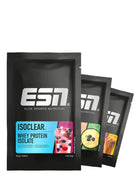
Our clear protein drink: Isoclear Whey Isolate. This high-quality isolate provides you with up to 25 g of protein per serving.2 The special thing about it is that it is clear compared to other whey proteins and tastes like juice, iced tea, or soda depending on the flavor – only without sugar, fat, and lactose.3 Ideal for everyone who wants a refreshment during training or everyday life and wants variety in the protein game.
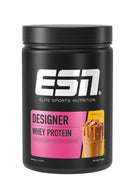
Germany's No. 1 Whey4: Designer Whey, the ideal combination of whey concentrate and whey isolate provides you with up to 23 g of protein per serving.5 In addition, it has been voted Germany's most popular whey protein. Absolutely deserved, because here full-bodied taste meets irresistible creaminess in over 25 delicious flavors.
Our most effective whey: Elite Whey Protein. With the combination of whey protein isolate (Whey Isolate) and whey protein hydrolysate (Whey Hydrolysate) as well as digestive enzymes, it provides you with what you need as an ambitious elite athlete: fast and targeted muscle supply, optimal protein intake, improved digestibility, and a low carbohydrate and fat content.

Optimal protein supply is & remains the be-all and end-all
Proteins are vital building blocks for our body – they are not only a determining part of hormones, enzymes, organs, the immune system, and all cells, but also contribute to an increase and maintenance of muscle mass.6 We are perfectly set up – how about you? Try out our whey protein samples and find the perfect protein for you!

