


Why Protein Shakes Can Cause Pimples
Whey Protein or whey protein is one of the most important proteins in dairy products. This raises the question of whether there is a link between the consumption of (whey) protein and the development of pimples and acne. In our guide, you will find out whether acne and pimples can be caused by consuming protein powder, what can be done about pimples caused by protein powder , and whether there is a way to consume protein powder without getting pimples.
How Do Skin Blemishes Form?
Pimples form when dead skin cells mix with excess oil from the sebaceous glands. This mixture clogs the pores of the skin and causes swelling. Bacteria can settle in this mixture and lead to inflammation and pus formation.[⁷]
This inflammation is an immune response of the body, in which white blood cells attack the bacteria. This produces pus, and a pimple becomes visible on the skin.
Do Protein Powders Cause Pimples?
Normally, no one gets pimples simply by taking protein powder. Although there are some studies that establish a link between the consumption of dairy products (which usually includes most protein powders) and the development of acne, these studies are not yet sufficient. Furthermore, not all dairy products are associated with the development of acne.
Diet can play an important role in the development of acne or the onset of skin blemishes – dairy products are frequently cited as a major cause. A review of several studies found a significant link between the consumption of milk and the development and severity of acne in both adolescents and adults.[⁸] However, these studies were observational studies, meaning they cannot prove a cause-and-effect relationship. The studies in the review also relied on self-reported data regarding the consumption of dairy products and the development of acne, which may have been not entirely accurate .
In the studies, not all dairy products could be linked to the development of acne, for example yogurt and cheese.[⁹] However, it has been shown that the consumption of milk and dairy products increases a hormone associated with the development of acne, namely the insulin-like growth factor 1 (IGF-1).[¹⁰]
Whey Protein and Pimples
Whey protein is one of the two main proteins in milk – the other is casein protein.[¹¹] Whey is the liquid part of milk that separates during cheese making. To be processed into whey protein, the whey undergoes a multi-stage filtration and drying process. Protein powders with whey are particularly popular among strength athletes. The protein contained in them helps to build muscle and maintain it.

Because whey is a milk protein and there is a controversial link between dairy products and acne, many people believe that whey protein shakes cause pimples or even acne. There are only a few case reports of acne associated with the intake of whey protein supplements in bodybuilders and strength athletes.[¹²] [¹³] However, these provide no compelling evidence for the claim that whey protein powder causes acne or pimples. Unlike a controlled study, these few case reports lack a control group, so certain reasons for the effects can only be proven to a very limited extent.[¹⁴]
Due to genetic factors (many people with acne or blemished skin have a family history), some people are more prone to developing acne when they consume certain foods, including protein from whey protein shakes.[¹⁵] Furthermore, oily skin, damp environments, hormonal imbalances, lack of sleep, obesity as well as fatty and sugary diets have been linked to an increased risk of acne.[¹⁶]
Acne and Pimples from Protein Powder: What You Can Do About It
If you suffer from blemished skin – whether the pimples were caused by consuming protein powder or for other reasons – you should take a closer look at your diet . It is important for a healthy complexion , which is why you should pay attention to a balanced diet.[¹⁷] For example, trace elements such as zinc, iodine, and vitamin C can contribute to a healthy complexion.
Strength athletes whose skin reacts to protein powder, but who still do not want to give up their protein shake, should make sure to consume only high-quality whey protein. Switching to a protein powder from a plant-based protein source may also help.
Can I Take Protein Powder Without Getting Pimples?
When it comes to "protein shakes and pimples," the type of protein powder you take and its quality certainly matter.
Whey protein supplements are still popular for supporting muscle building – unfortunately, substances have been detected in supplements, especially those marketed to bodybuilders, that are known to cause acne, such as anabolic steroids or precursors to anabolic steroids.[¹⁸] [¹⁹] [²⁰] Although adding ingredients not listed on the label to supplements is illegal, it does happen. Therefore, it is important that you are well informed about the ingredients in whey protein and other supplements.
Generally, there are two common types of whey protein supplements on the market: whey concentrate and whey isolate. Compared to whey protein concentrate, whey protein isolate is more highly processed, which results in a higher protein content, fewer calories, and less lactose and fat . Whey isolate is therefore also excellent as whey protein without lactose for people with lactose intolerance. This is why whey protein isolate is more expensive than whey protein concentrate. However, anyone who is not lactose intolerant or does not strictly watch their calories can also use whey protein concentrate very effectively. The third type is whey protein hydrolysate, which is mostly consumed by professional athletes. This is also a whey protein, but the protein has already been broken down into peptide chains through hydrolysis, so it can be absorbed more quickly by the human body.
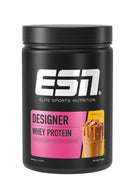
To ensure that you buy a high-quality protein powder, you should use products that have been independently tested – such as protein powders from ESN.
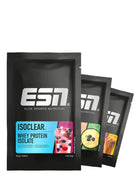
Are you looking for a protein powder with a very high protein content and low fat and lactose? Try our ESN Iso Whey Protein Isolate!
Conclusion: How to Enjoy Your Protein Shake Without Getting Pimples
You do not have to give up your protein shake for fear of blemished skin or even acne on your face or body. Although there are weak indications that certain dairy products may be linked to the development of acne, there is no compelling evidence for the claim that whey protein, for example, causes pimples.
So, protein powder generally does not cause pimples, and you do not have to fear an acne breakout. If you still prefer to avoid whey or cannot tolerate dairy products, you can also use a vegan protein powder .
When buying protein powder and supplements , it is important to pay attention to excellent and tested quality – this way you can be sure that you are not taking any unwanted substances with your shake.
Sources:
[1] https://pubmed.ncbi.nlm.nih.gov/25719897/
[2] https://pubmed.ncbi.nlm.nih.gov/28850291/
[3] https://pubmed.ncbi.nlm.nih.gov/32941710/
[4] https://www.springermedizin.de/De/nutrition-and-skin/10357200
[5] https://nutritionandmetabolism.biomedcentral.com/articles/10.1186/1743-7075-10-46
[6] https://www.karger.com/Article/Abstract/345102
[8] https://onlinelibrary.wiley.com/doi/10.1002/ped4.12166
[11] https://pubmed.ncbi.nlm.nih.gov/29778512/
[12] https://pubmed.ncbi.nlm.nih.gov/29778512/
[13] https://pubmed.ncbi.nlm.nih.gov/28361446/
[14] https://myhealth.alberta.ca/Health/Pages/conditions.aspx?hwid=tp14098
[17] https://www.karger.com/Article/Abstract/90655
[18] https://www.researchgate.net/publication/336875949_Menopausal_Acne_-_Challenges_And_Solutions
[19] https://jamanetwork.com/journals/jamadermatology/fullarticle/479409

