




How Our Muscles Build Mass
Our muscles consist of many parallel fibers that contract to generate force and thus enable our everyday movements. Muscle contractions require energy obtained from proteins and amino acids. The body is therefore constantly busy processing and renewing them. If it does not receive enough protein to keep the muscles in good shape, it begins to break down muscle mass. If there is a balanced net protein synthesis (the body breaks down as much protein as it is supplied), you can maintain your muscle mass. If you want to build mass, it is therefore necessary to supply your body with more protein than it needs.
As you can probably imagine, simply consuming protein will not make your muscles grow. Without strength training, you will quickly reach the limits of your muscle growth rates. Of course, exercise in general is good for your health, but strength training in particular pursues the ultimate goal of muscle hypertrophy. So if you are serious about building mass, you should join a gym soon or upgrade your equipment for heavy weights at home, because strength training with moderate to heavy resistance is currently the only proven training method for increasing muscle mass.[¹]
But keep in mind that hard training without enough protein will not bring you closer to your goal of building mass. Strength training merely provides the hormonal response in your body that drives muscle growth. Building mass can only be ensured and muscle loss prevented if you also ensure the sufficient availability of energy in the form of protein.[²]
4 Tips and Tricks for Your Strength Training to Build Mass
It is now clear that strength training is essential for building mass. But if you are new to the sport and have no experience yet with how your body reacts, we would like to give you the following four tips and tricks to make your start as easy as possible.
Perhaps you have been doing strength training for a while but are not yet seeing the best results in building mass and can benefit additionally from our knowledge. Give it a try right away!
Tip No. 1: Choose the Right Exercises
Strength training offers an incredible variety of exercises and at the same time has the advantage that some exercises (compound exercises) train several muscle groups at once and others (isolation exercises) specifically target one muscle group. For your start in strength training, isolation exercises are initially suitable, as they are usually guided by machines and thus minimize the risk of injury. The particularly good news: isolation and compound exercises can be equally effective for hypertrophy.[³] So you can build mass right from the start if you follow the other points.
Once you have already gained some experience and a feel for weights and exercise execution, you should still definitely try compound exercises. In addition to stimulating various muscle groups and thereby increasing training efficiency, they also support functional movements that give you practical muscle strength for real-life activities.
In the long term, you should incorporate both compound and isolation exercises into your training so that you can build sufficient mass.
Tip No. 2: Plan Your Week with an Optimal Training Structure
Especially as a beginner, you can quickly slip into overtraining without realizing it immediately. But even if your motivation is so great that you can hardly hold back, you should listen to your body and give it enough time and rest.
To build mass efficiently, you should generally not train the same muscle group two days in a row. It is best to alternate between upper- and lower-body workouts at the beginning before you venture into a demanding split plan. For the number of sets during a training session, you can use the following guideline: First perform three sets each of three to five compound exercises (with a lower number of repetitions) and then three sets each of one to two isolation exercises (with a higher number of repetitions).
This makes it possible for you to benefit from every type of training, push your strength levels, and maximize muscle growth potential. Don't put too much pressure on yourself – two training sessions per week can even be completely sufficient to build mass.
Tip No. 3: Choose the Right Number of Repetitions During Exercise Execution
Your training plan for healthy muscle growth is only complete when you have planned not only the exercises but also the number of sets and repetitions. Muscle hypertrophy, which is necessary to build mass, is ensured if you perform the exercises with 1 to 20 repetitions.
The repetition continuum can be decisive for achieving your goal of building mass. To develop a feel for the different stimuli, you can use the following repetition numbers as a guide:
| Repetitions | Effect |
| 1 - 5 repetitions | Develops more strength |
| 6 - 12 repetitions | Leads to more muscle growth |
| 12 - 20 repetitions | Develops more muscle endurance |
However, new studies have shown that some people respond better to higher repetition ranges for muscle growth and others better to lower repetition ranges.[⁴] To find your suitable repetition continuum that stimulates your mass building, simply go through different training phases with different repetition ranges and see which one gives you the most muscle growth.
Tip No. 4: Choose the Right Training Weight
As already mentioned, the most efficient training method for gaining muscle mass is resistance training with moderate to heavy resistance. The level of resistance varies from person to person – you should therefore individually find out how much weight you can move and where your limits are. Nevertheless, there are also two rules of thumb here that you can use as a good guide:
- It is best to take at least enough weight so that you can perform no more than 20 repetitions within a set.
- In terms of the previously mentioned repetition continuum, after your planned last repetition, (almost) no more full repetitions should be possible.
With these two principles, you stimulate your muscles the most, so that they build more mass after training to be better prepared for the next training.
Tip: To get even more out of your training, you can try our Pre-Workout Booster ESN Crank. Even though the EU has not yet approved any nutrition and health-related claims (Health Claims) regarding the effects of training boosters, our Crank has established itself in the supplement scene. Many successful athletes and competitive athletes confirm the positive effect on training.

Build mass healthily without gaining too much body fat
For many people, it is unimaginable that building physical mass can be a difficulty. The thought arises solely from the fact that they would resort to the unhealthiest junk foods, which contain an insane amount of empty calories. A calorie surplus is thus ensured, but the body is by no means supplied with sufficient nutrients. Most of the time, protein is also missing, no strength training is performed, and the body begins to store fat reserves. That this cannot be the purpose behind the goal of building mass is probably obvious. Rather, it is about supplying the body specifically with enough and good nutrients so that the muscles can build mass, but at the same time not consume so many calories that more fat than muscle is gained.
The line between sufficient and too many calories is very narrow and also individual. Every body has its own maximum muscle growth rate. If this is already maxed out, all calories not needed for this will be stored as fat. That is why you should slowly approach your individual calorie surplus. First find out your basic calorie requirement, which is composed of various factors such as your age, your gender, your current fat-free body mass, your physical activity, your profession, and if applicable, even your illnesses – an online calculator can help you with this. Scientifically, a calorie surplus of 10-20 percent is recommended.[⁵] In calories, this means, for example, a surplus of 250-500 kcal for a 79-kilogram man. For a 61-kilogram woman, on the other hand, the extra calories could be 200-400 kcal.
So that mass building works well, your focus should naturally also be on the origin of your calories. Recent research results show that at least 1.6 g of protein per kilogram of body weight should be consumed as building material for the muscles.[⁶]
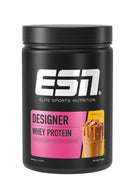
Tip: You can reach your protein goal, which is needed for mass building, most easily with the help of a protein shake. Check out our delicious varieties of ESN Designer Wheys right away!
Fats are particularly important for ensuring optimal hormonal function. The following guideline serves this purpose: 0.5-1.5 g per kilogram of body weight.[⁷] You should fill the rest of the remaining calories with high-quality carbohydrates. The calculation is simple if you know that one gram of fat contains nine kilocalories, one gram of carbohydrates four kilocalories, and one gram of protein also four kilocalories.
But here too: Listen to your body! If you notice that you are suddenly not only building muscle but also gaining a lot of fat, you should take another look at the quality of your food or/and reduce the calorie surplus.
This is how fast your body can build mass
As you have already noticed, our bodies are very individual, so it is difficult to give a clear answer to how fast you will build mass. Nevertheless, there is a guideline from current research that you can factor in with good nutrition and consistent strength training: The muscle growth rate is 0.25-0.9 kilograms per month.[⁸]
Give your body the rest it needs for muscle and mass building
Skeletal muscle is the most adaptable tissue in our body. Through intensive strength training, the muscle fibers suffer small injuries. To repair the small damage, satellite cells on the outside of the muscle fibers are activated, which join together and thus ensure an enlargement of the muscle. The process takes some time, which you should give your body. Therefore, keep in mind not to train the same muscle group two days in a row.
Conclusion on building mass
Building mass is not easy, but it is also not a complex science. If you are patient and disciplined, you can implement the points mentioned above in no time and nothing will stand in the way of your dream muscles anymore. Exercise strength training within a reasonable framework, eat as nutrient- and above all protein-rich as possible, and give your muscles recovery times. Your body takes care of the rest with the help of the building materials. Enjoy the process and be proud of yourself!
Note: Since a calorie deficit is necessary for a reduction in body weight or body fat and a calorie surplus for an increase in muscle mass, achieving both goals at the same time is not possible. We therefore recommend alternating between mass building and definition.
Sources:
[2] https://www.ncbi.nlm.nih.gov/pmc/articles/PMC7889060/
[3] https://www.ncbi.nlm.nih.gov/pmc/articles/PMC4592763/
[5] https://pubmed.ncbi.nlm.nih.gov/31247944/
[6] https://www.ncbi.nlm.nih.gov/pmc/articles/PMC5852756/

