


Can you build muscle without animal protein?
For a long time, it was believed that vegan, i.e. purely plant-based proteins, could not compete with animal protein in terms of muscle building. However, this misconception has now been debunked.
Studies have shown that it makes no difference for muscle building whether athletes consume animal or plant-based protein to consume. A higher protein intake promotes muscle mass gain, regardless of the source of the protein.[¹]
For this reason, it is also possible for vegans to build muscle and maintain muscle mass. However, since animal protein has a higher biological value than individual plant protein sources, it makes sense to combine several plant protein sources in a vegan diet for muscle building. This not only increases the nutritional value, but also improves the amino acid profile, allowing you to consume all essential amino acids.
How much protein do you need for vegan muscle building?
Even with a vegan diet, protein is paramount for muscle building. But how much protein should you consume daily if you want to build muscle as a vegan? In general, it is recommended to consume a daily amount of 1.6 to 2.4 grams of protein per kilogram of body weight.[²] Ideally, you should not consume this amount of protein in a single meal, but rather spread your protein intake throughout the day. If you want to use plant protein for muscle building, it is recommended to consider a few tips :
- Distribute your protein intake evenly throughout the day by focusing on high-protein meals and snacks.
- Consume protein at regular intervals. Athletes often choose an interval of three to four hours for about three to five servings per day.
- Make sure to combine different plant protein sources to achieve a higher biological value and a balanced amino acid profile.
Which vegan protein sources are suitable for muscle building?
If you want to build muscle as a vegan, you should focus on a balanced diet with plenty of protein. After all, what non-vegan athletes achieve with eggs, fish, and meat can also be achieved on a vegan diet with a variety plant-based foods functioning. By the way, animal protein sources often provide not only protein, but also larger amounts of cholesterol and saturated fatty acids. Vegan foods with plenty of protein, on the other hand, usually contain higher amounts of healthy fats, valuable nutrients and fiber. Therefore, you can easily consume enough protein for muscle building on a vegan diet.
Suitable vegan protein sources for muscle building include:
- Grains
- Legumes (e.g. lentils, beans, chickpeas)
- Amaranth, quinoa, chia
- Seeds (e.g. flaxseed)
- Nuts (also as a milk alternative in the form of almond milk)
- Tofu
- Tempeh
- Edamame
- Seitan
Vegan protein powder supports your muscle building

A high-protein vegan diet should lay the foundation for muscle building. Although there are numerous vegan protein sources with which you can consume protein, it is not always possible to cover your entire protein requirements through your daily diet. For this reason, vegan protein powder can also support you in muscle building as a supplement to a balanced diet.
However, vegan protein powders have long had a low standing. This was because they were often not only worse tasting than whey protein powders, but also had a poorer amino acid profile. This is especially true when only a single protein source, e.g. rice protein, is used in the formulation of vegan protein powder.
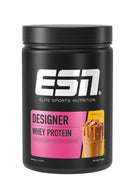
To avoid this, we have Vegan Designer Protein combined several plant protein sources. Pea, hemp, and sunflower protein provide you with a complete amino acid profile and thus supply your muscles with all essential amino acids. Due to its high biological value , our Vegan Designer Protein ideally supports your muscle building and ensures effective stimulation of muscle protein synthesis. This makes it perfect for all vegan athletes who want to support their muscle building with a high-protein diet.
What else matters for muscle building on a vegan diet?
Protein is not everything. Although high-quality plant protein is important for building muscle as a vegan, there are other aspects for successful muscle building. These include:
- Sufficient energy for muscle building
- Muscle protein synthesis must be greater than muscle breakdown
- A good micronutrient distribution for a functioning (energy) metabolism
Anyone who wants to build muscle on a vegan diet should therefore always consume enough calories in addition to good plant protein sources and pay attention to a balanced distribution of fats, carbohydrates and other important nutrients . We have summarized for you how this works best and what you should pay attention to.
Ensure a positive energy balance
Not only with a vegan diet is a positive energy balance important for muscle building. This means that you consume more calories than you burn. However, how high this calorie surplus should be cannot be answered universally. Because it depends on various factors, including how much weight gain you are willing to accept and how quickly you want to build muscle up . The former is above all your personal decision. How quickly you build muscle cannot necessarily be influenced. Muscle building depends on various basic conditions , e.g.:
- Genetic predispositions
- Hormone balance
- Muscle insertions
- Metabolism
As a rule, beginners build muscle faster than advanced athletes, so they can often choose a higher calorie surplus. To achieve a positive energy balance, energy-dense vegan foods can help you. These include:
- Grains and products made from them
- Legumes
- Dried fruit
- Nuts and seeds
- Avocado
- Coconut milk
- Tofu and tempeh
- Fats and oils
- Milk alternatives (e.g. almond milk, oat milk)
Pay attention to your carbohydrates
Although carbohydrates do not play the main role in muscle building, you should under no circumstances neglect them. Because well-filled glycogen stores can give your muscles strength, especially during longer training sessions .[³] Furthermore, carbohydrates also support regeneration after training.
Even with muscle building on a vegan diet, you can choose between slow- and fast-digesting carbohydrate sources. After training, Long-chain carbohydrates and fiber are helpful to support your body in regeneration. Just before your workout, the carbohydrates should be as quickly available as possible for the body so that the muscles also have enough energy for the exertion. It is recommended to opt for an easily digestible meal before exertion. But which pre-workout snack is right for you, you will usually find out yourself over time.
Suitable carbohydrate sources for vegan muscle building include, for example:
- Potatoes and sweet potatoes
- Brown rice
- Whole grain
- Wheat
- Rye
- Oats
- Millet
- Corn
- Legumes (e.g. beans, lentils)
- Vegetables
- Fruit (also dried fruit)
- Berries
- Oatmeal
Incorporate fats into your vegan diet
Fats are important for the body and should therefore not be missing from a vegan muscle-building diet. What fat intake you set per day also depends on your personal goals. There is no direct upper limit, although a very high-fat diet could potentially negatively affect muscle building.[⁴]
Athletes who eat a vegan diet should pay special attention to Omega-3 fatty acids DHA and EPA . These are not only important for general health, but can also support the regeneration of the muscles[⁵], the building of muscle mass[⁶] and the muscle protein synthesis[⁷] . Since it is somewhat more difficult to consume Omega-3 fatty acids through food on a vegan diet, the important fatty acids can also be supplied via supplements . Our ESN Omega-3 Vegan Capsules support you with valuable Omega-3 fatty acids from marine algae and are thus the perfect alternative to non-vegan Omega-3 from fish oil.
Liquid calories as a tool for vegan muscle building
Even if you have set muscle building as a concrete goal, many people find it difficult to eat enough calories throughout the day. In this situation, liquid calories can be a great help. One option, for example, delicious shakes allow you to ensure your calorie and protein intake at the same time. You can, for example, mix a shake made from our Vegan Designer Protein with almond milk, oats, and fruit of your choice. Thanks to the different flavors, you can add plenty of variety and practically consume your calories and protein effortlessly by enjoying really delicious protein shakes.
Complement your vegan diet with workouts
The same applies to vegan muscle building: nutrition alone cannot stimulate your muscle growth. Instead, a protein- and nutrient-rich diet should go hand in hand with regular training. To build muscle mass and see results, strength training several times a week is therefore ideal. Through regular workouts, your muscles signal to your body that more nutrients are needed to ensure an adequate supply . This causes your body to start mobilizing reserves and absorb new nutrients particularly well. The result: You build muscle.
By the way, you can additionally support your muscles during hard training sessions with all eight essential amino acids. Our ESN EAAs help you get the most out of your workout!
Vegan muscle building: Tips for your recipes
If you haven't dealt with the topic of vegan nutrition and muscle building yet, you are probably wondering how you can achieve a good nutrient intake. To optimally support your muscles with your diet, you can follow these guidelines :
- Carbohydrates: Long-chain carbohydrates should ideally be included in your largest meals. Just before training, you can also opt for quickly available carbohydrates that provide energy without straining your digestion during the workout.
- Proteins: Plant-based protein should be included in every one of your meals throughout the day from various sources for successful muscle building.
- Fats: Incorporate healthy fats into your diet, e.g., through high-quality oils and nuts.
- Other nutrients: To supply your body with all the important nutrients, you should eat at least two to three servings of vegetables per day, and fruit should also be on the menu daily.
If you have been eating vegan for a while, you have probably already found a selection of vegan recipes for yourself. However, targeted muscle building may still pose challenges even for experienced vegan cooks, because the necessary calorie surplus has to be achieved somehow. We have put together a few tips for you on how you can consume more protein and calories in your diet with just small adjustments :
- Supplement homemade sauces and bread spreads, e.g., with nut butter or coconut milk
- Use high-quality oils for frying or refining
- Sprinkle nuts and seeds over your dishes
- Opt for pureed foods: Soups, sauces, and shakes are easier to eat.
Use protein powder for baking: Our Vegan Designer Protein is not only great in shakes but also for baking.
Conclusion: Muscle building is easily possible for vegans too
As a vegan, you should by no means let yourself be discouraged by prejudices about vegan nutrition and muscle building. If you pay attention to a good combination of a protein-rich diet and strength training several times a week, you can achieve your goals in the long term with vegan protein sources too. For a varied and delicious vegan diet, you can use not only plant-based foods but also our Vegan Designer Protein. If you supply your muscles with high-quality protein and all the important amino acids, it doesn't matter whether you consume animal-based or plant-based protein. So nothing stands in the way of vegan muscle building anymore.
Sources:
[1] https://journals.humankinetics.com/view/journals/ijsnem/28/6/article-p674.xml
[2] https://examine.com/guides/protein-intake/#how-much-protein-do-you-need-per-day
[3] https://link.springer.com/article/10.2165/00007256-199111010-00002
[4] https://www.sciencedirect.com/science/article/abs/pii/S0899900718309535
[5] https://www.ncbi.nlm.nih.gov/pmc/articles/PMC4663562/

